
Medical disclaimer: This page is for information only. It does not constitute medical advice. If you think you have pompholyx or any other skin condition, please consult your GP or a dermatologist.
Do you have any questions about pompholyx? Ask us using the chat button on the right.
Reader Stories: Real Experiences of Living with Pompholyx
Pompholyx is one of those conditions where the clinical description tells you what it is but doesn’t quite capture what it’s like. The itch at 2am. The self-consciousness about your hands in a meeting. The years of trying things that sort of help and things that don’t. The strange relief of finding out other people have exactly the same experience.
That’s what this section is for.
We’re building a library of real stories from people who live with pompholyx and dyshidrotic eczema. Some have had it for decades. Some are newly diagnosed. Some have found things that help. Some are still looking. All of them know what it actually feels like, which is something no clinical page can fully convey.
Stories so far
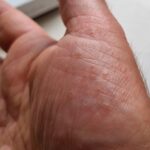
Andy, 60s, UK
Andy has had pompholyx for 40 years. He built the original pompholyx.co.uk in 2008 and knows what it’s like to just get on with it.

CJ, adult, North America
CJ has had eczema her whole life. Her first pompholyx flare-up came at 14. Nearly three years into her most recent outbreak, she’s still dealing with it daily
Angie, US
Angie is worried that she now has pompholyx.
Caz, UK
Caz’s pompholyx appeared soon after she took up beekeeping. With her hands calmer, she’s working out which triggers set it off.
What others have said
We’ve collected these from the original pompholyx.co.uk over the years. They’re short, but they’ll probably sound familiar.
“I have little tiny water blisters on my fingertips, palm, sides of my fingers, around the nails and once in a while under the nails, usually in clusters. I just keep lotion on my hands always because when they go away they turn into little dry patches of flaky skin.”
“Mine show up with the seasons, usually spring and fall. They don’t itch unless I start messing with them. From what I’ve read, it sounds like they’re not related to anything more serious, which is good.”
“It seems to only appear on my left hand, on the sides of my ring finger and middle finger. It also seems to happen during late spring or early summer. First I’ll get these tiny itchy bumps, which then turn to red, dry, scaly, itchy patches.”
“I get red bumps on the palm of my hand at the base of my thumb and at the base of my little finger on the outside edge. I use a mouse a lot and I’ve noticed these are the two areas that touch the desk most often. The symptoms come and go but get worse when the weather moves from mild to hot and when I am tired or stressed.”
“I have had these finger blisters most of my life. I am now 35. My dad gets them too. Anyway, I have learned to live with them. They come out every spring and I expect them.”
Share your story
If you have pompholyx or dyshidrotic eczema and want to share your experience, we’d like to hear from you. Your story might be exactly what someone else needs to read.
You don’t need to have a dramatic story or a long history with the condition. A few paragraphs about what it’s like for you, what triggers it, what helps and what doesn’t, is enough. A photo of your hands is welcome but not required.
Everything is anonymised before publishing. We use first names or nicknames only, and any photos are cropped to hands only with identifying features removed.
What next?
If you recognise what’s described on this page, the right first step is to see your GP or a dermatologist. They can confirm the diagnosis, identify possible triggers, and discuss treatment options with you.
This site covers all of those areas in detail. You might find these pages useful next:
What is Pompholyx?, Causes and Triggers, Treatments, Living with Pompholyx and Reader Stories.
The information on this page has been researched and written by Andy Brown, who has lived with pompholyx for over 40 years and has been running pompholyx information sites since 2008. It is intended for general information purposes only and does not constitute medical advice. This page has been reviewed for clinical accuracy by [Medical Reviewer Name, Qualifications]. Individual symptoms, causes, and appropriate treatments vary. Always consult a qualified GP or dermatologist for advice specific to your situation. If your skin condition is severe, worsening, or infected, seek medical attention promptly.