
About Pompholyx.com
Who I am
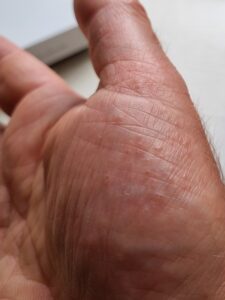
My name is Andy Brown. I’ve had pompholyx for around forty years. I built the original pompholyx.co.uk in 2008 because I couldn’t find anything online that felt like it was written by someone who actually understood what the condition is like to live with. That gap existed then. Eighteen years later, people were still emailing me to say it still did.
So I rebuilt it.
Why now?
Three things brought me back to this.
The first is treatment. The landscape for pompholyx and dyshidrotic eczema has changed significantly in the last couple of years. Delgocitinib cream, the first treatment ever specifically developed for chronic hand eczema, was approved in the UK in 2024 and in the US in July 2025. Biologics like dupilumab are increasingly being used for hand eczema with real results. These are genuine developments and most sufferers haven’t heard about them. That felt like something worth fixing.
The second is reach. The original site was pompholyx.co.uk. I had emails from people all over the world: the US, Australia, India, Canada, countries I hadn’t expected. The .co.uk domain confused people outside the UK or made them think the site wasn’t for them. It was. This one is too. Pompholyx doesn’t care where you live, and neither does this site.
The third is the emails themselves. Even in the age of AI, Google and social media, people with pompholyx are still struggling to find information that feels human and useful. Institutional sites tell you what the condition is. They don’t tell you what it’s like. Eighteen years of emails from strangers telling me the original site helped them was enough to convince me it was worth doing again, properly this time.
What this site is
Pompholyx.com is an independent information and community resource for people with pompholyx and dyshidrotic eczema. It covers what the condition is, what triggers it, what treatments are available and what living with it actually looks like day to day.
I’m not a doctor. I’m someone who has had this condition for four decades, has read everything written about it, has corresponded with hundreds of people who have it, and knows what it’s like to sit with itchy, blistered hands wondering what on earth is going on.
Everything on the site is written in plain language. Where the evidence is clear, I’ll say so. Where it’s uncertain or mixed, I’ll say that too. Every pillar page is reviewed for clinical accuracy by a qualified dermatologist.
This site doesn’t replace a conversation with your GP or a dermatologist. If you think you have pompholyx, see a doctor. But if you’ve just come from that appointment and you’re sitting at home trying to make sense of what you were told, this is where I hope you’ll find some answers.
A brief history
I built pompholyx.co.uk in 2008, probably the first dedicated patient information sites for the condition. It ran for over fifteen years and received emails from sufferers in dozens of countries.
In 2026 I relaunched it as pompholyx.com: rebuilt from scratch, with updated content reflecting the latest treatments, a broader international focus and a proper community section where people can share their own experiences.
The original site’s ethos hasn’t changed. Plain language. Honest about uncertainty. Written by someone who actually has the condition.
Get in touch
If you have pompholyx and want to share your experience, the Reader Stories page is the place to do that. Every submission is read and I aim to respond to everyone who gets in touch.
If you have a question, a correction or just want to say hello, use the form below.
What next?
If you recognise what’s described on this page, the right first step is to see your GP or a dermatologist. They can confirm the diagnosis, identify possible triggers, and discuss treatment options with you.
This site covers all of those areas in detail. You might find these pages useful next:
What is Pompholyx?, Causes and Triggers, Treatments, Living with Pompholyx and Reader Stories.
Andy Brown is not a medical professional. The content on this site is for information purposes only and does not constitute medical advice. Always consult a qualified GP or dermatologist for advice specific to your situation.